

Choosing a CSP: What Actually Matters
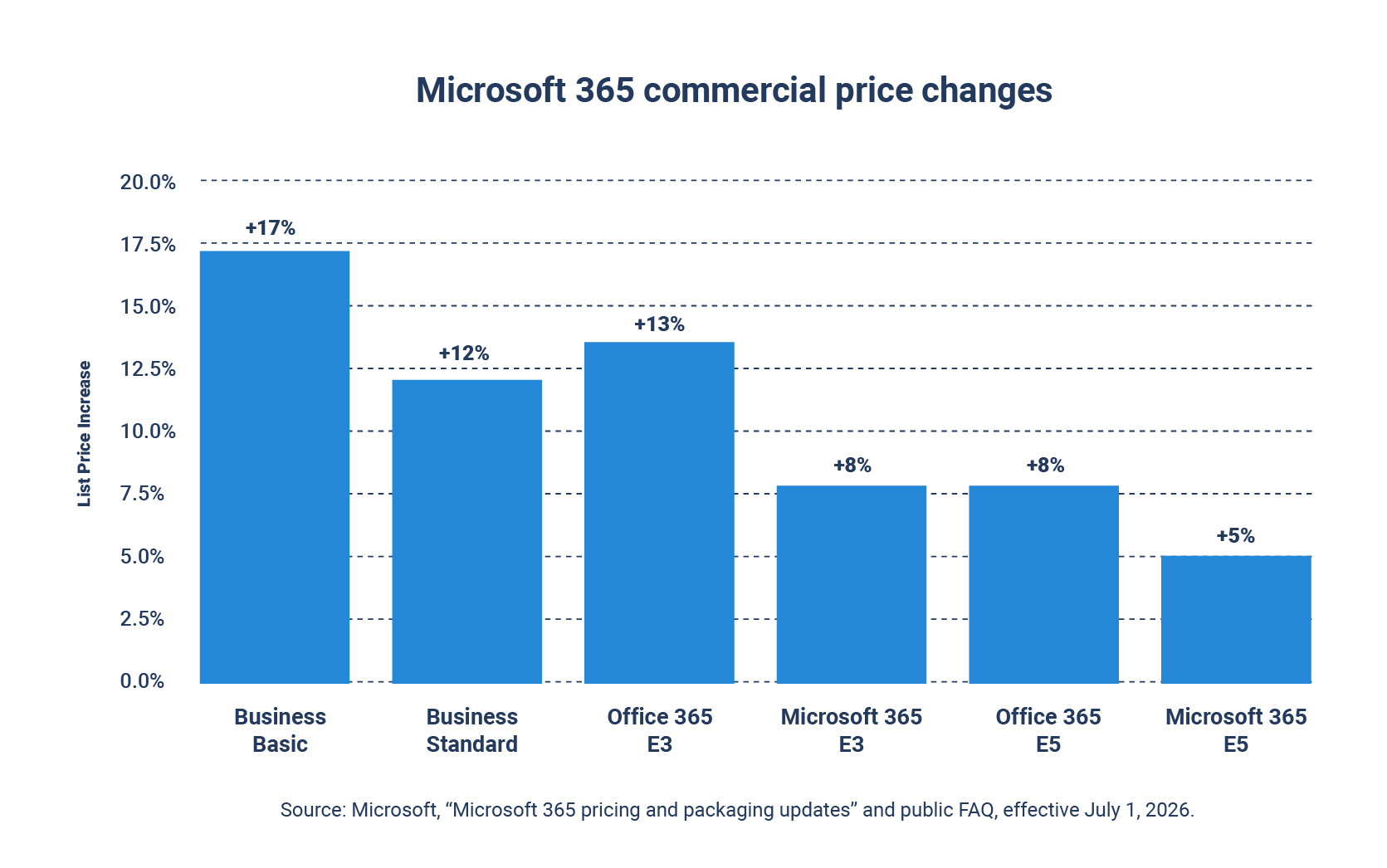
Microsoft eliminated EA discount tiers in November 2025, tightened EA eligibility to roughly 2,400 seats, and raised Microsoft 365 list prices again in July 2026. Running 500 to 5,000 seats on a Microsoft-heavy stack, a Cloud Solution Provider (CSP) is now the practical licensing path, not one option among several. Most mid-market organizations already have this decision made for them.
The harder decision is still ahead: which CSP partner will govern that relationship once you sign, not just process the order.
Every provider's homepage sounds nearly identical: flexible terms, responsive support, a trusted Microsoft partner. A distributor, a regional MSP, and a Microsoft licensing specialist can each make all three claims, since none of them commits to anything you could actually hold them to later. No vendor's marketing page says, "rigid terms" or "slow support," so the words by themselves tell you nothing about which partner will actually behave differently once the contract is signed.
Six specific, checkable things separate a partner who governs the relationship from one who simply fulfills it: how they prove their compliance claims (governance), who owns the outcome when something breaks (accountability), what you can see about your own environment without asking (visibility), how a support ticket actually gets resolved (support ownership), whether anyone keeps checking in after the contract is signed (optimization cadence), and how much of their business centers on Microsoft specifically (specialization). Most provider checklists stop at naming criteria like these. This one explains how to verify each one, then turns all six into the exact questions to bring into your next vendor conversation.
1. Governance: Ask for the Audit, Not the Adjective
"Governed" is a word every CSP vendor uses and a claim few of them let you verify. Ask a prospective partner to name the specific compliance framework behind that claim, then have them walk you through what it actually covers.
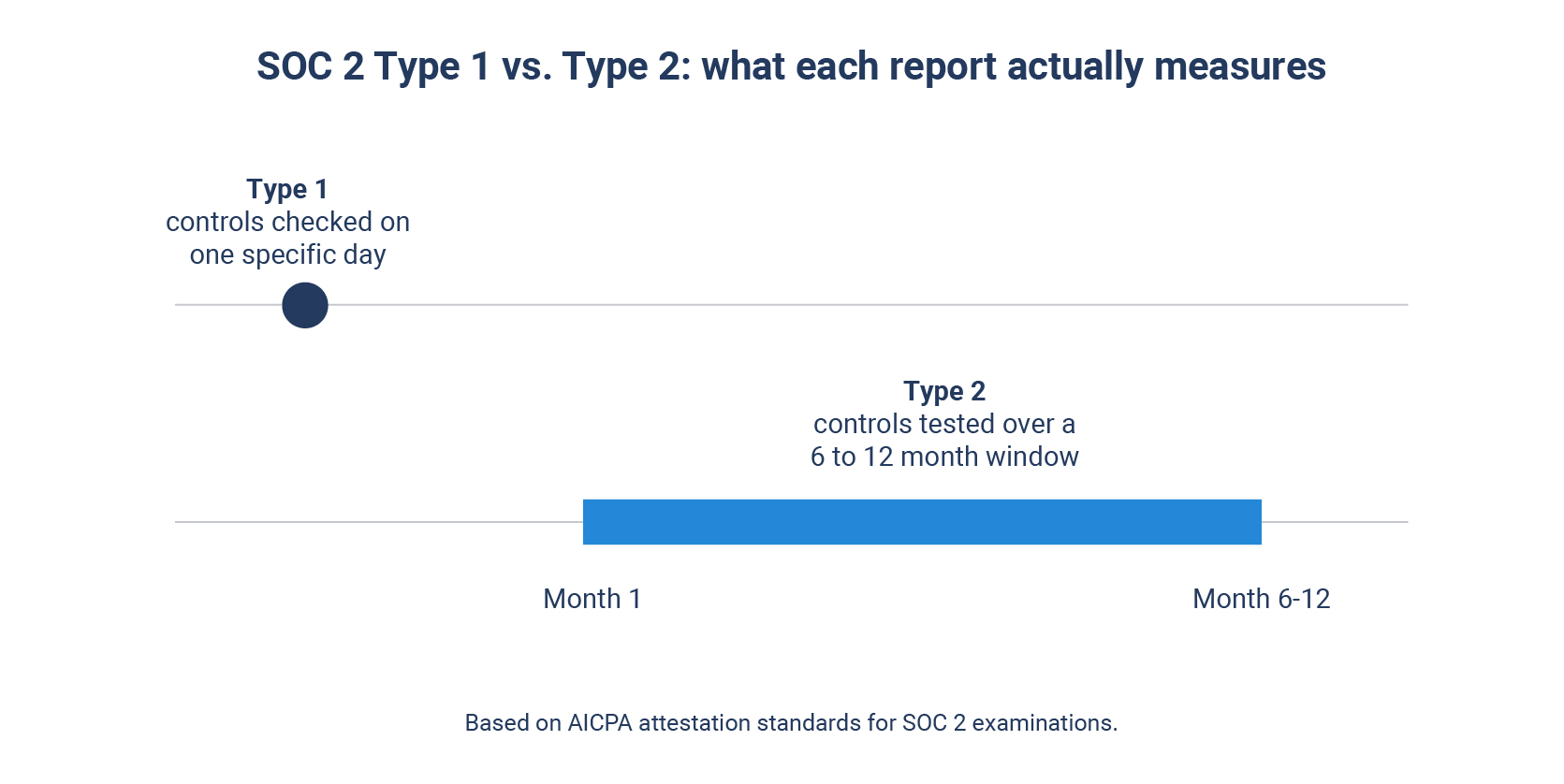
For a partner handling your licensing, billing, and user data, the relevant framework is typically SOC 2 Type 2, an attestation standard maintained by the American Institute of Certified Public Accountants. Two versions of that report exist, and the difference matters. A Type I report confirms a vendor's controls are designed appropriately on one specific day. A Type 2 report confirms those same controls operated effectively over a monitoring period, commonly 6 to 12 months. One is a snapshot. The other is evidence gathered over time.
SOC 2 Type 2 report attests to the audited company's own internal controls. It says nothing about your environment, your compliance posture, or what happens to your data once it leaves the vendor's systems. Some sales conversations blur that line, intentionally or not, and it is a distinction worth holding firm on.
The difference shows up quickly in conversation. A vague answer sounds like an assurance offered as a closing line, with no further detail behind it. A specific answer names the report type, states the examination window, and identifies which of the five trust categories, security, availability, processing integrity, confidentiality, and privacy, are actually in scope for that engagement. The second answer takes thirty seconds longer and tells you far more.
Holding a SOC 2 Type 2 report is not unusual in this space; most established CSP partners have one. What separates a governed partner from a transactional one is what happens when you ask to see it: a direct answer about scope, or a line item on a capabilities slide. DCG treats this as a normal conversation with your account contact rather than a formal request routed through a form. Hold every partner to that same standard, not only the ones who offer it first.
2. Accountability: Who Answers When Something Breaks?
Microsoft's own rules for the CSP program require a Direct Bill partner to provide first level support to its customers, backed by an active partner support plan. That is a structural feature of the program itself, not a marketing claim. The partner selling you the license is also on the hook for the first call when something goes wrong.
Licensing sourced through a distributor does not automatically carry that same structure. Licensing, billing, and support can sit with separate parties, none of whom owns the outcome end to end. A governed partner can typically point to one name and one escalation path covering licensing, billing, and technical support at once. If a prospective partner needs three separate contact lists to cover those three functions, that disconnected structure is already at work before you have signed anything.
Let's understand an example: a critical Teams outage lands at 4 p.m. on a Friday, ahead of a long weekend. Under a governed relationship, one team already has your environment on file, already knows your escalation path, and already owns the outcome. Under a fragmented one, the first call reaches a distributor's general queue, which routes to a support desk that has never seen your tenant, while your account manager finds out about the outage from you instead of the other way around.
3.Visibility: Can You See Your Own Environment, or Just Your Invoice?
Real visibility means seeing seat level usage, current license assignments, and deployment status directly, not waiting on someone else's summary. A monthly invoice shows what you spent. Usage data shows what you are actually running, and the two tell different stories.
In practice, that often means catching licenses still assigned to employees who left the company months ago, or premium SKUs sitting on accounts that only ever use email. Those are the seats a distributor-sourced relationship rarely surfaces on its own, since no one on the other end is actually looking for them, and unused seats are one of the most common places CSP spend quietly leaks.
This is a genuine shift from how EA customers have typically tracked their own environment, largely through periodic true up reporting handled at renewal. CSP replaces that with an ongoing relationship inside Partner Center where usage, assignments, and billing detail are visible throughout the year, not only when the bill arrives. Some CSP partners expose that access directly through a self-service portal. What matters is having it, not which interface delivers it. Ask a prospective partner to show you, not describe, what you would actually see day to day.
4. Support Ownership: One Team, or a Relay of Open Tickets?
Microsoft maintains dedicated partner support tiers, Advanced Support for Partners and Premier Support for Partners, because CSP partners are expected to carry real technical support capability rather than resell licenses and step back. Ask a prospective partner directly what support tier they hold, who answers a ticket first, and how many hand-offs it takes to reach someone who can actually resolve it. An answer with specific names and specific numbers is a signal.
Escalation built as a relay, where a first-line agent triages and hands off to someone else, who hands off again, costs time exactly when time matters most. A team of senior engineers who already understand your environment, whether that's Microsoft 365 architecture, Azure networking, or a hybrid Active Directory setup, skips that relay and starts diagnosing the real problem on the first call.
5. Optimization Cadence: Is Anyone Watching After the Ink Dries?
Most vendor relationships go quiet after signature. Azure Consumption Commitments make that a costly habit to tolerate. A Microsoft Azure Consumption Commitment is a contractual obligation to a defined Azure spend over a set term, tracked against a running balance, and an unmet commitment triggers a shortfall charge for whatever is left over. That mechanism is written into the contract itself.
Ongoing attention is what separates a governed partner here: checking consumption, license assignments, and commitment pacing well before renewal, not scrambling the month it is due. In practice, that looks like a scheduled quarterly review against real consumption data, not a single phone call once the renewal date is already closed. Ask a prospective partner about what that review actually contains: a report you receive on a set schedule, or a conversation that only happens when you ask for one.
6. Specialization: Microsoft-Only, or Microsoft-Also?
A multi-vendor MSP or a broad distributor treats Microsoft licensing as one line of business among several. A Microsoft-only partner's entire operation centers on it: every engineer, every account manager, every hour of support capacity.
Neither is automatically the right answer. A multi-vendor MSP can be the more practical fit for managing security, networking, and licensing under one roof. A Microsoft-only partner is the better fit when the Microsoft relationship itself is complex enough to warrant a dedicated team. The honest question is which trade-off you are making, and whether the partner across the table can name it directly.
The Six-Question Gut Check Before You Sign
Six questions, one per criterion above, ready to bring into your next vendor conversation.
A partner that answers all six with specifics instead of adjectives deserves a serious look, regardless of size or name recognition. DCG built its own model around exactly these six criteria, starting with Microsoft-only focus and SOC 2 Type 2 governance you can ask about directly. Bring these same six questions into your next vendor conversation, then see exactly how DCG answers each one.

.png)