


Is Your ERP Project in Trouble? 7 Signs You Should Hit Pause and Reevaluate
ERP projects often hit turbulence, and not just from technical challenges. True digital transformation is cultural as much as it is technological. When deadlines slip, milestones get pushed, and team fatigue sets in, eventually, someone asks the question: “Do we need to hit pause?”
Pausing an ERP implementation when turbulence hits isn’t a setback, it's a strategic reset. Taking a timed break can help realign the project with business goals, revisit the scope, and address underlying issues before they unfurl into costly setbacks. Knowing when to stop and rethink takes real courage. Shifting systems means addressing the inevitable complexity of shifting mindsets, habits, and cross-functional operations.
Listed below are seven early signs that your ERP project may be in trouble, how to address them, and why it’s better to reassess now than recover losses later.
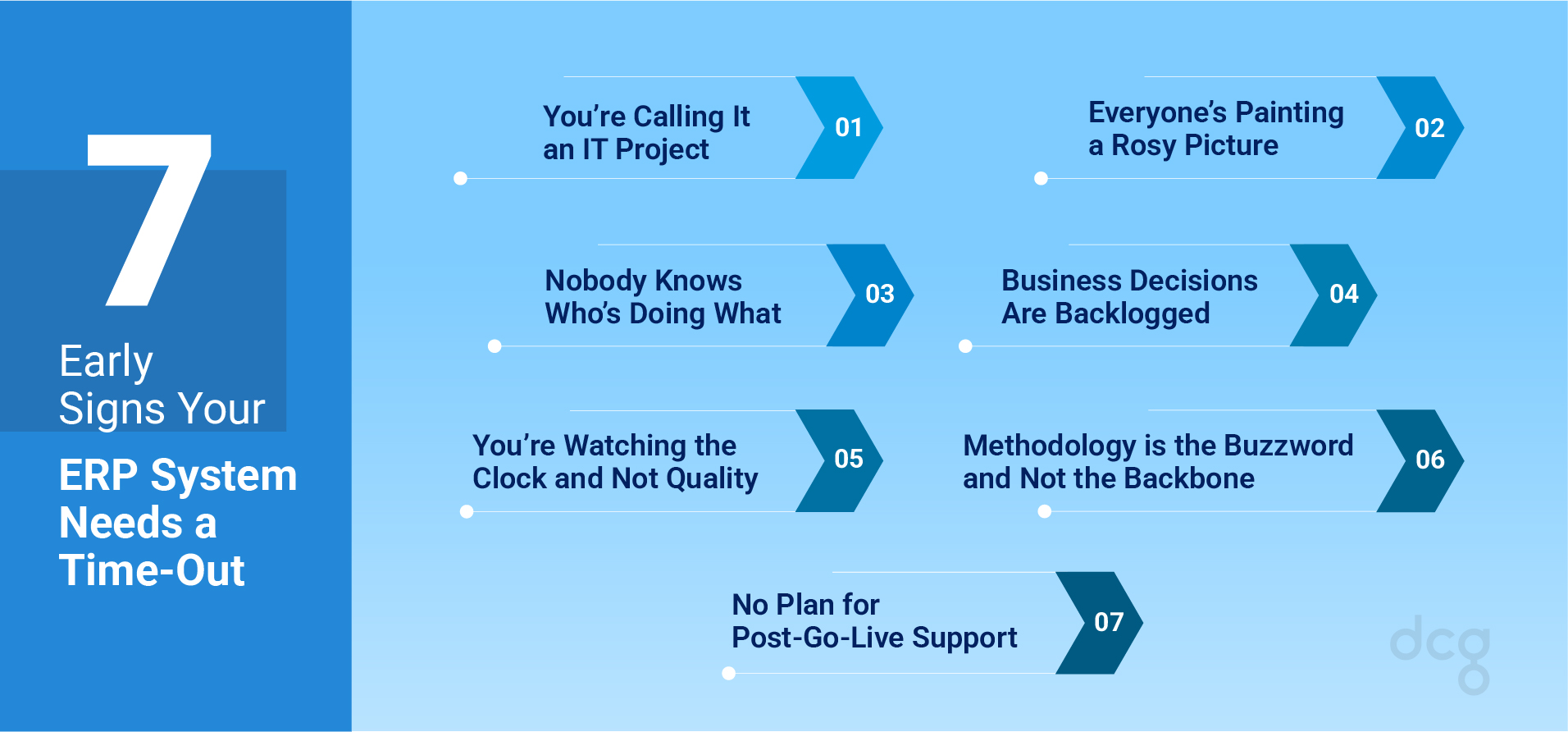
7 Early Signs Your ERP System Needs a Time-Out
1. You’re Calling It an IT Project
If your team views ERP implementation as “just another IT thing,” the wheels are already wobbling. ERP is a business transformation tool intended to revamp your processes with every stakeholder aligned to a shared vision. When business leaders aren’t involved in configuring modules or defining outcomes, you’ll face resistance, outdated methods, and less user adoption.
What’s the fix?
Treat ERP like a business-led initiative for the benefit of the people. Empower department heads, not just IT teams, with the necessary knowledge and visibility into planning. Business users must lead transformation, as technology shouldn’t dictate but instead support your vision.
2. Everyone’s Painting a Rosy Picture
When project updates and reports sound too perfect to be true, it’s an early sign that your ERP planning is the missing key data. Misalignment across workstreams, including technical, business, and support functions, leads to blind spots that hinder collaboration. Without transparent communication, minor issues can spiral into expensive roadblocks that require costly corrections.
What’s the fix?
Embrace a culture of accountability with open and honest reporting. Use cross-functional check-ins to surface risks early. When mutual trust leads operations, decisions are faster, and costs stay lower.
3. Nobody Knows Who’s Doing What
When roles are unclear, team leads tend to pick and delegate tasks based on preference and not necessity. Accountability disappears in such cases, and critical decisions are left hanging. This further leads to confusion, delays, and duplicated effort.
What’s the fix?
Clarify ownership at every level with data to back every decision made. Ensure that each team member understands their responsibilities and how their work contributes to business outcomes.
4. Business Decisions Are Backlogged
Your plan might look on track but if business decisions are delayed or deferred, execution stalls. And your ERP project does not achieve its goals. Team leads shouldn’t carry the weight of process changes alone, as these modifications need signoffs from the business to be implemented.
What’s the fix?
Utilize milestone reviews and gate approvals to prompt decisions before going ahead. Don’t kick the can down the road, as each delayed decision compounds risk, adds cost, and erodes project momentum.
5. You’re Watching the Clock and Not the Quality
Projects often focus on meeting timelines and budgets but overlook the importance of validating quality. Testing gaps, rushed signoffs, and ignored bugs are all signs of a deteriorating project. If maintenance isn’t built in from day one, even the best ERP technology blueprints risk falling apart eventually.
What’s the fix?
Balance time, cost, and quality using actionable data to quantify the widespread impact of ERP implementation. Schedule formal quality reviews after each phase to validate before advancing.
6. Methodology is the Buzzword and Not the Backbone
Teams get excited about being “agile” but forget why. Without proper structure, problems surface only when it’s too late. A one-size-fits-all approach to ERP implementation leaves critical processes unaddressed, and key stakeholders feel excluded.
What’s the fix?
Blend methodologies with practical, goal-aligned solutions framed for how your operations run. Use the waterfall method for structured planning and signoffs, employ agile methods for adaptive problem-solving, and apply lean principles to keep momentum without waste.
7. No Plan for Post-Go-Live Support
You’re close to going live, but who will manage future support for the system? If the same resources are overextended across testing, data, and admin, you’re setting your teams up for burdensome post-launch struggles.
What’s the fix?
Build your IT support function early. Assign resources for environmental management, updates, and get user support before going live. Bringing in support early gives your ERP system the precision and reliability your enterprise demands.
Know When to Pause an ERP Implementation
Slipping timelines and team burnout are merely symptoms and not the root cause. If you’ve spotted even one of these seven signs already, your ERP project may be off track. But it’s not too late.
It’s time to consider a proven ERP rescue strategy, such as DCG’s SPEAR framework. It’s not the software or your team that needs rescuing but the misalignment beneath it all.
Hitting pause could be the opportunity for you to reevaluate your project by addressing the root causes of misinformation and delays—before the damage is irreversible. We built our SPEAR approach for situations like this. It helps project leaders realign their goals, refocus their systems, and restart with strategies rooted in real deliverables.
Ready to Get Back on Track?
The cost of reevaluating is always lower than the cost of recovery. You don’t need to scrap your entire ERP investment if early signs of trouble appear after launch. However, you do need a more personalized and structured path forward. Any misalignment between your team and goals requires you to act quickly and inspire change.
Here’s how SPEAR helps you turn things around:
- Spot hidden operational misalignments before they derail the project
- Prioritize what matters most to the business, like your team morale and KPIs
- Engage leadership and teams with clear scope, roles, and decisions
- Align technology to tangible outcomes and not just technical checklists
- Rescue your ERP momentum in time and rebuild trust in your data
Before making any moves, our data-led framework evaluates team readiness across five dimensions. These five dimensions are strategy, posture, education, enthusiasm, and deployment. This upfront scorecard ensures leadership is aligned, the vision is clear, and the organization is ready to execute before any time or money is invested. SPEAR isn’t about surprises or shortcuts - just deliberate progress that sticks.


.png)